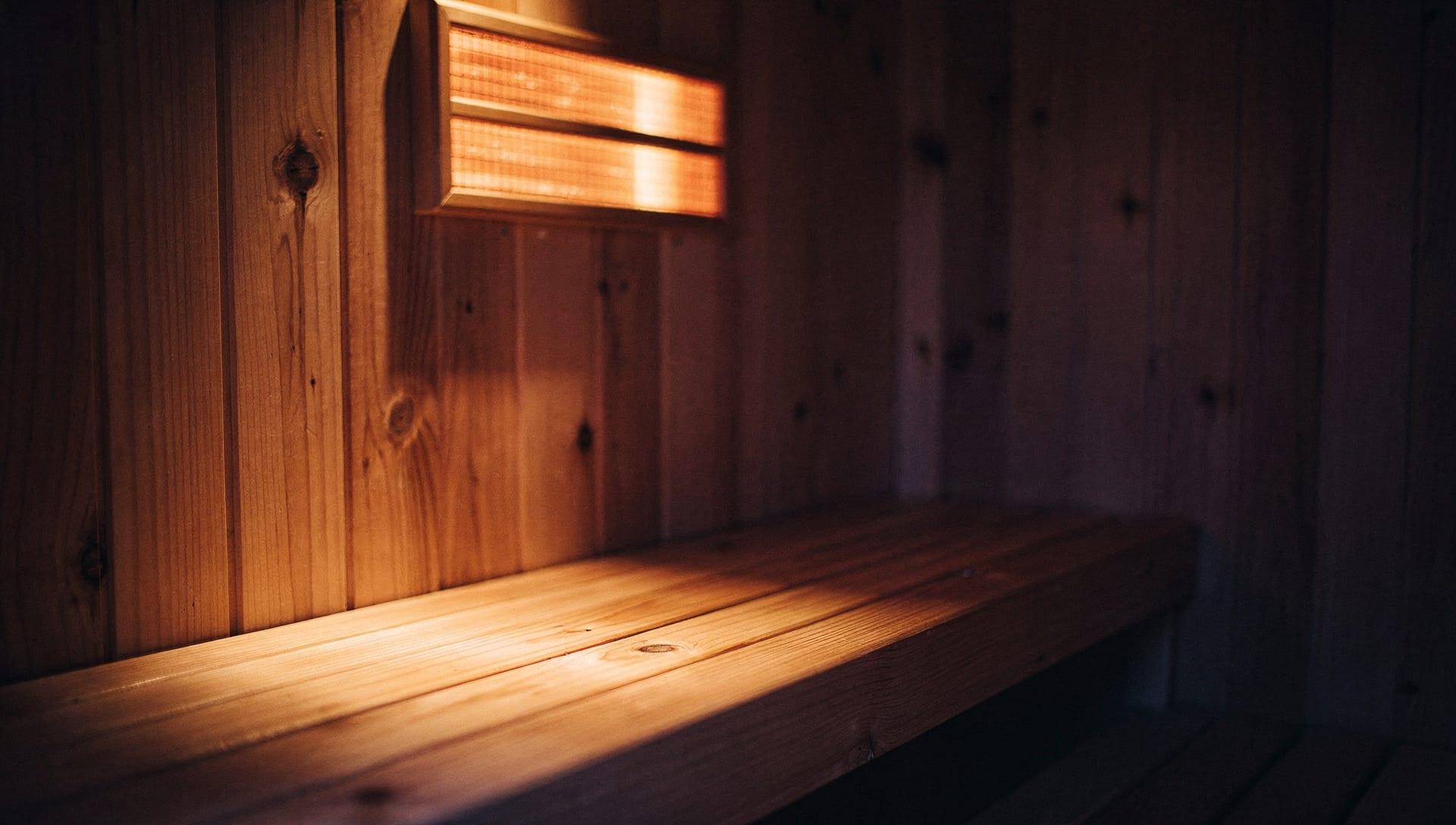
How is infrared heat different from a traditional sauna?
A traditional sauna heats the room; the hot air then heats you, which is why walking into one feels like opening an oven. Infrared works in the opposite order: emitters radiate heat that your body absorbs directly, the same family of warmth you feel from sunlight, minus the ultraviolet. The air around you stays comparatively mild, so your face and airways get a gentler ride while your core still heats and the sweat still comes.
Air temperature
- Infrared sauna
- About 115 to 135 degrees
- Traditional sauna
- About 160 to 200 degrees
How it heats you
- Infrared sauna
- Radiant heat absorbed by the body
- Traditional sauna
- Hot air warms the skin
How it feels
- Infrared sauna
- A gentle build, easy breathing
- Traditional sauna
- Intense and enveloping
Typical session
- Infrared sauna
- 30 or 45 minutes
- Traditional sauna
- 10 to 20 minutes at a stretch
Evidence base
- Infrared sauna
- Smaller, growing studies
- Traditional sauna
- Decades of Finnish cohort data
What ours adds
- Infrared sauna
- Chromotherapy light and sound, private
- Traditional sauna
- Steam ritual (at other studios; ours is infrared)
| Feature | Infrared sauna | Traditional sauna |
|---|---|---|
| Air temperature | About 115 to 135 degrees | About 160 to 200 degrees |
| How it heats you | Radiant heat absorbed by the body | Hot air warms the skin |
| How it feels | A gentle build, easy breathing | Intense and enveloping |
| Typical session | 30 or 45 minutes | 10 to 20 minutes at a stretch |
| Evidence base | Smaller, growing studies | Decades of Finnish cohort data |
| What ours adds | Chromotherapy light and sound, private | Steam ritual (at other studios; ours is infrared) |
What does the research say?
The famous findings belong to traditional sauna: a 2015 JAMA Internal Medicine cohort study followed over 2,300 Finnish men for about two decades and found that frequent sauna bathing was associated with fewer fatal cardiovascular events. An association in a cohort is not proof of cause, and it is still the strongest sauna data anyone has.
Infrared-specific research is younger and smaller: a 2009 review in Canadian Family Physician found limited moderate evidence for blood pressure and evidence from a single study for chronic pain, and a small 2009 pilot in Clinical Rheumatology reported short-term pain and stiffness relief in rheumatoid arthritis and ankylosing spondylitis patients, with sessions well tolerated. Mayo Clinic's consumer guidance sums the field up fairly: some evidence that saunas may help, larger studies still needed, and no harmful effects reported with infrared saunas. That is our register too: the heat feels genuinely good, some evidence is promising, and nobody here will sell you a miracle.
Which one should you choose?
Choose the one you'll actually use. If 180-degree air on your face is the reason you skip saunas, infrared removes that reason: the sauna warms you through at temperatures you can breathe easily in, for a longer, calmer session. If you love the steam-and-ritual of a Finnish sauna, that experience lives elsewhere; ours is infrared because it pairs best with recovery sessions and sensitive lungs. People in pain tend to be the most convinced:
“I barely made it into the spa I was in so much pain and walked halfway back to my car after before I realized it didn't hurt to walk.”
“I bought an infrared sauna and get about 48 hours of pain reduction per 20 min session... If the pain is mild I can be pain free for a couple days.”
What does chromotherapy add?
Our sauna pairs the infrared warmth with chromotherapy, slow washes of colored light you choose, plus sound. The honest evidence note: color-light research is thin, and we treat the color as comfort and atmosphere rather than medicine. We wrote a whole article saying exactly that, because you deserve the same honesty about our own services that we apply to everyone else's.
How do people pair it here?
The community's favorite sequence is ours too: salt cabin first, sauna second. Clear your chest in twenty seated minutes, then let deep warmth take the week out of your shoulders, and the pairing books as a single visit. A sauna session is 30 or 45 private minutes, and the pricing page has what each one costs.